No one can guarantee a video goes viral, but the levers are known. In 2026, watch time and completion rate drive roughly 40 to 50 percent of how TikTok, Reels and Shorts rank a video, shares and saves now outweigh likes, and the informal bar for wide distribution is about 70 percent completion. Win the first 3 seconds, cut every second that sags, give people a reason to share, and post on a rhythm you can hold.
Going viral is not luck you can order on demand. It is also not pure chance.
A note on the numbers in this post, because it changes how you should read them: TikTok publishes no documentation of how its ranking works, and no benchmark for what good looks like. Every weighting and percentage below - here and in every other article on this subject - is a third-party inference drawn from watching how videos behave, not a figure any platform has confirmed. They are still useful. They are not facts, and anyone presenting them as facts is guessing with confidence.
With that said, the estimate most trackers converge on is that watch time and completion rate account for something like 40 to 50 percent of short-form ranking, and that shares and saves now outweigh likes. Virality is mostly downstream of four things you fully control: the hook, the pacing, the reason to share, and how often you post. This guide covers each one, including the part most guides skip: what you cannot control.
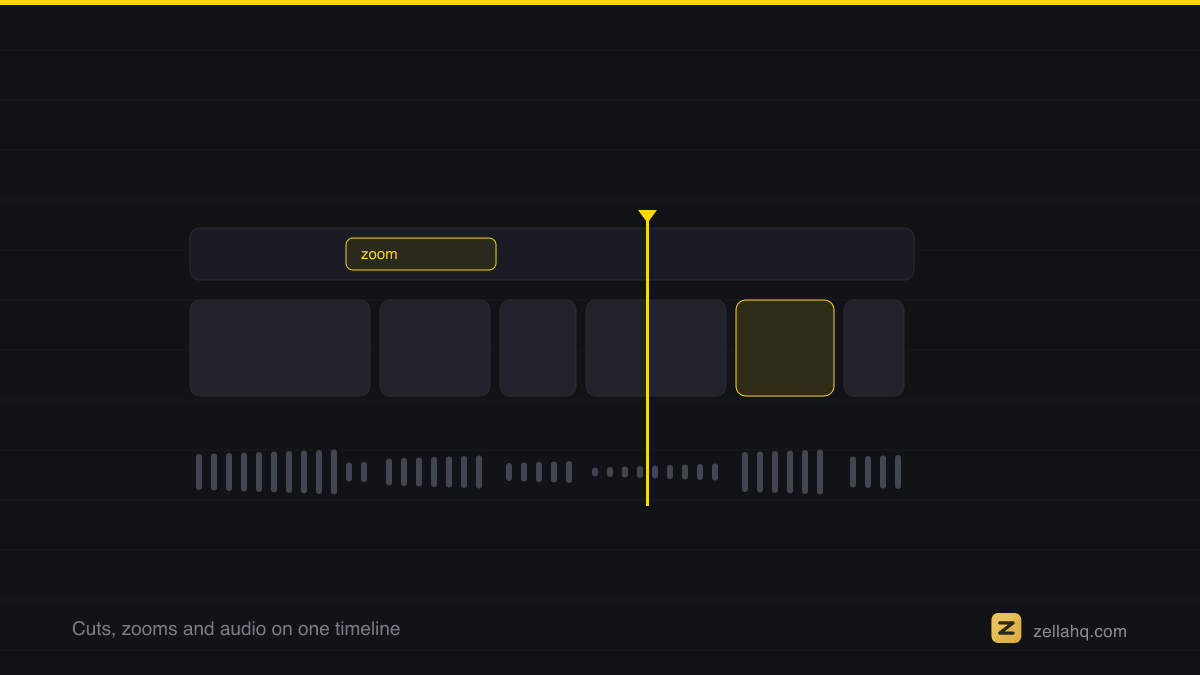
What actually makes a video go viral in 2026?
Modern feeds (TikTok's For You page, Instagram Reels, YouTube Shorts) do not push a video because it is "good." They push it because early viewers behave in ways that predict more viewers will enjoy it. The signals that matter most, in order:
- Average watch time is widely believed to be the strongest single signal, followed by completion rate and replays. Believed, not published.
- Shares and saves appear to carry considerably more weight than likes - a shift creators reported through 2025 and which nobody at TikTok has confirmed or denied.
- Early velocity matters: the common observation is that videos gathering strong engagement in their first hour tend to get pushed further. The hour is a rule of thumb rather than a documented window.
Key terms defined:
- Watch time is the total seconds people spend watching, summed across viewers. Longer average watch time signals value.
- Completion rate is the share of viewers who watch to the end. The informal bar creators now aim at is roughly 70 percent, up from about 50 percent a couple of years ago. "Informal" is doing real work in that sentence - it is a moving consensus among people comparing notes, not a threshold anyone has published.
- The hook is the first 1 to 3 seconds that decides whether someone keeps watching or scrolls.
The measured version of "you have seconds": Nielsen Norman Group's dwell-time work found users often leave within 10 to 20 seconds absent an obvious payoff. Your own numbers are in YouTube's audience retention report, where the dips line up with the exact moments people left.
Why does the hook matter so much?
Because the decision happens almost instantly. Survey figures put around 71 percent of viewers deciding within the first few seconds whether to keep watching, and the three-second hold is generally treated as the first checkpoint that matters. Both are third-party numbers. Videos holding 60 percent or more of viewers past three seconds are reported to travel further, though the exact cut-off varies with whoever measured it.
Practical rules for the first 3 seconds:
- Say or show the payoff early. Do not warm up.
- Open on motion or a bold on-screen text line, not a logo or a slow intro.
- Cut the dead air before your first word. If you took a breath before talking, delete it.
If you want a deeper library of proven openers, see our companion piece on the best hooks for short-form video.
How does pacing and watch time drive the algorithm?
Third-party samples put the average TikTok view at somewhere under ten seconds - the widely-quoted 8.4 carries more decimal places than the method deserves - so every second of filler is a second where someone leaves. Retention is highest on short videos. Third-party benchmarks put TikToks under 15 seconds at roughly 60 to 70 percent, and 15-to-30-second clips at 50 to 60 percent. TikTok publishes neither figure. One widely-cited industry sample found most short-form videos watched for between 41 and 80 percent of their length, with under a third exceeding 81 percent. Treat the precision loosely; the shape of the distribution is the useful part.
To raise watch time, edit ruthlessly:
- Remove every pause, "um," and false start. Silences and filler are where viewers bail.
- Cut on the beat. Frequent, motivated cuts keep the eye moving.
- Zoom in on the important moment. A punch-in signals "look here" and resets attention.
- Match length to substance. A 12-second clip that never sags beats a 40-second one that drags.
Tight editing is exactly where a fast tool pays off. Zella is a native screen recorder and editor for Mac and iPhone, and its Auto-Polish runs the moment a recording opens: silence and filler cuts, emphasis zooms, noise removal and voice polish, a hook title, and a ducked music bed, all on-device. It does not touch your colour, so the footage still looks like what you shot.
If you talk to camera or narrate a screen recording, that removes the tedious half of raising retention. One-tap Make it Viral goes further: it runs that same pass and adds a warm grade and matched sound effects under the strongest cuts on top. For the specific steps, see how to remove filler words from a video on Mac and how to auto-zoom a screen recording.
What makes a video shareable and save-worthy?
Since shares and saves now outweigh likes, ask a blunt question before you post: would a real person send this to a friend, or tap save to come back to it? Five content patterns show up repeatedly in videos that earn those deeper signals:
- Delayed reveal (the answer comes at the end, so people watch through).
- Save-worthy tutorial (a clear how-to people bookmark).
- Relatable story (viewers tag someone: "this is so you").
- Unexpected comparison (before/after, this-vs-that).
- A quotable, loopable, provable moment (a line worth repeating, an ending that loops back to the start).
A clean loop is a quiet superpower: if the last frame flows into the first, replays climb, and replays are a top-three signal.
How often should you post to go viral?
Consistency beats intensity. Steady posting rhythms appear to help, and accounts that go more than three or four days quiet often report a weaker next video. This is one of the least-verified claims in the whole field - nobody outside the platforms can separate "the gap hurt reach" from "the video was worse". A sustainable, data-backed cadence:
| Platform | Recommended cadence | Notes |
|---|---|---|
| TikTok | 1 to 2 posts/day, 5 to 6 days/week | Keep at least 3 hours between same-day posts |
| Instagram Reels | 1/day, 4 to 5 days/week | Rarely worth two Reels in one day |
| YouTube Shorts | 1/day, 4 to 5 days/week | Space extra posts ~4 hours apart |
The right calendar is the one you can hold for months, not the most aggressive spreadsheet. Reposting one strong video natively to all three platforms multiplies your shots on goal. Zella can reframe for TikTok, Reels, and Shorts into 9:16, 1:1, or 16:9 with face tracking in one click, so a single recording ships everywhere without re-editing. For the walkthrough, see how to make a 9:16 reel from a screen recording.
The honest part: virality is not guaranteed
No tactic makes any single video go viral. The widely-described model is that clips are metered through phases: an initial test to a few hundred viewers, expansion to thousands, then a breakout only if the signals hold. It is a reasonable reconstruction from observed behaviour rather than a documented mechanism. Most videos stop at phase one, and that is normal. What separates creators who eventually break through is volume plus quality: they post consistently, they treat each clip as a test, and they make the controllable parts (hook, pacing, shareability) excellent every time. Do that long enough and the math works in your favor.
Viral-readiness checklist
Before you post, confirm:
- The hook lands in the first 3 seconds, with the payoff visible or stated.
- Silences, filler words, and false starts are cut.
- There is a zoom or cut on every key moment; nothing drags.
- There is a clear reason to share or save (reveal, tutorial, relatable, comparison).
- Captions are on for silent autoplay viewers.
- The ending loops or resolves cleanly.
- It is reframed and posted natively to each platform.
Frequently asked questions
How long should a video be to go viral in 2026? Shorter clips retain best. Third-party benchmarks put under-15-second TikToks at roughly 60 to 70 percent retention and 15-to-30-second clips at 50 to 60 percent; TikTok publishes no figures of its own. Match length to substance and cut anything that sags.
What matters more, likes or shares? Shares and saves. They appear to carry more weight than likes, which creators broadly now treat as the weakest signal. Reported, not confirmed.
How important is the first hour after posting? Very. Videos gathering engagement quickly are generally reported to travel further, so post when your audience is actually awake. The specific first-hour window is a rule of thumb.
Do I need expensive editing software? No. Free tools handle every lever in this guide. Zella's free plan includes unlimited recording length (free exports run up to 2 minutes), the full editor and all of the AI: Auto-Polish, one-tap Make it Viral, the AI Assistant, Auto B-Roll, on-device captions, AI background removal, all 25 transitions and 92 colour looks. The only caps are on export: 1080p and up to 2 minutes, watermark-free. See pricing.
Can I really guarantee a video goes viral? No, and be skeptical of anyone who promises it. You can only stack the odds: strong hook, high watch time and completion, share-worthy payoff, and consistent posting.
What completion rate should I aim for? Around 70 percent is the informal bar creators currently aim at, up from roughly 50 percent a couple of years ago. No platform publishes a target, so treat it as a direction of travel rather than a pass mark.
Make your next video with Zella.
Record, edit and ship on Mac and iPhone - local, private, free to start.
RELATED